Guide
Understanding Japanese Knife Steel: From White Paper to SG2
Published: 2026-04-07 · Updated: 2026-04-10
Steel is the soul of a Japanese knife. While handle materials, blade geometry, and fit-and-finish all matter, the steel determines how sharp the knife can get, how long it holds that edge, and how much maintenance it demands. Understanding steel is the single most important factor in choosing the right knife for your needs.
This guide covers every major steel type used in Japanese kitchen knives, organized from traditional carbon steels to modern powdered metallurgy alloys.
The Basics: What Makes Steel Different
All steel is iron mixed with carbon. What distinguishes one steel from another is the amount of carbon and the addition of other elements — chromium, tungsten, vanadium, molybdenum, and cobalt. Each element changes the steel’s behavior:
- Carbon: Increases hardness and edge retention. More carbon = sharper potential, but also more brittleness.
- Chromium: Provides corrosion resistance. At 12%+ chromium, steel is classified as “stainless.”
- Tungsten: Improves wear resistance and toughness.
- Vanadium: Refines grain structure for a finer edge.
- Molybdenum: Enhances strength and corrosion resistance.
- Cobalt: Increases hardness at high temperatures (relevant during heat treatment).
Traditional Carbon Steels (Hagane)
Japanese carbon steels are classified using the “paper” system — named after the color of the paper in which the steel was historically wrapped at the Hitachi Metals factory (now Proterial).
Shirogami (White Paper Steel)
White Paper steel is pure carbon steel with no alloying additions beyond carbon, manganese, and silicon. It is the closest thing to traditional tamahagane used in Japanese swords.
Shirogami #2 (White #2)
- Carbon: ~1.1%
- Hardness: HRC 60-63
- The most popular carbon steel for kitchen knives. Praised for its purity, White #2 is the easiest Japanese steel to sharpen. It takes a screaming-sharp edge with minimal effort on any whetstone. The trade-off is moderate edge retention — it gets sharp fast but dulls faster than harder steels.
- Best for: Home cooks who enjoy sharpening and want the keenest possible edge.
Shirogami #1 (White #1)
- Carbon: ~1.3%
- Hardness: HRC 62-65
- Higher carbon content than White #2, resulting in better edge retention but a slightly more difficult sharpening experience. White #1 is less common in kitchen knives but is prized by professionals who want the White Paper feel with longer-lasting edges.
- Best for: Professional cooks who sharpen frequently but want longer intervals between sessions.
Aogami (Blue Paper Steel)
Blue Paper steels add tungsten and chromium to the carbon steel base, creating alloys that are harder and more wear-resistant than White Paper steels. They are not stainless — the chromium content is too low for corrosion resistance — but they do provide superior edge retention.
Aogami #2 (Blue #2)
- Carbon: ~1.1%, plus tungsten and chromium
- Hardness: HRC 62-64
- The workhorse of professional Japanese kitchens. Blue #2 offers excellent edge retention while remaining reasonably easy to sharpen. It develops a beautiful dark patina quickly and provides outstanding tactile feedback during cutting. Many professional sushi chefs consider Blue #2 the ideal steel.
- Best for: Professional cooks and serious home cooks who want an everyday carbon knife.
Aogami #1 (Blue #1)
- Carbon: ~1.3%, plus tungsten and chromium
- Hardness: HRC 63-65
- More carbon and tungsten than Blue #2. Exceptional edge retention but noticeably harder to sharpen. Less common than Blue #2 in kitchen knives.
- Best for: Users who prioritize edge retention over ease of sharpening.
Aogami Super (Blue Super)
- Carbon: ~1.4%, plus tungsten, chromium, molybdenum, and vanadium
- Hardness: HRC 64-67
- The ultimate carbon steel. Aogami Super holds an edge longer than any other carbon steel and can be hardened to extreme levels. However, it is significantly harder to sharpen and more brittle at peak hardness. Knives made from Aogami Super often require experienced sharpening technique.
- Best for: Enthusiasts who want maximum performance from carbon steel and own quality sharpening equipment.
Conventional Stainless Steels
VG-10
- Chromium: ~15%, plus cobalt, vanadium, and molybdenum
- Hardness: HRC 60-62
- VG-10 is the gold standard of Japanese stainless knife steel. It offers an excellent balance of edge retention, corrosion resistance, and sharpenability. It takes a very keen edge (though not quite as keen as carbon steels), holds it well, and resists rust effectively. The Tojiro DP series uses VG-10 to outstanding effect at an accessible price point.
- Best for: Beginners and anyone who wants a low-maintenance knife that still performs at a high level.
AUS-10
- Chromium: ~14%, plus vanadium and molybdenum
- Hardness: HRC 59-61
- Similar to VG-10 but slightly softer and easier to sharpen. AUS-10 is less common than VG-10 but appears in some excellent mid-range knives. It sacrifices a small amount of edge retention for improved ease of maintenance.
- Best for: Home cooks who want stainless convenience with easy sharpening.
Ginsan (Silver-3 / Gin-san)
- Chromium: ~13%
- Hardness: HRC 59-62
- Ginsan is a fascinating steel that bridges the gap between carbon and stainless. Developed by Hitachi Metals, it has enough chromium to resist corrosion but sharpens with a feel remarkably similar to White Paper steel. Many bladesmiths who traditionally work with carbon steel use Ginsan when customers request stainless — it is the closest stainless experience to carbon.
- Best for: Users who want carbon steel feel without the maintenance commitment.
Powdered Metallurgy Steels
Powdered metallurgy (PM) steels represent the cutting edge of knife steel technology. Instead of melting and casting steel in the traditional way, PM steels are atomized into fine powder, then compressed and sintered under extreme pressure and heat. This creates an ultra-fine, uniform grain structure impossible to achieve through conventional methods.
SG2 / R2 (Super Gold 2)
- Chromium: ~14%, plus molybdenum and vanadium
- Hardness: HRC 63-65
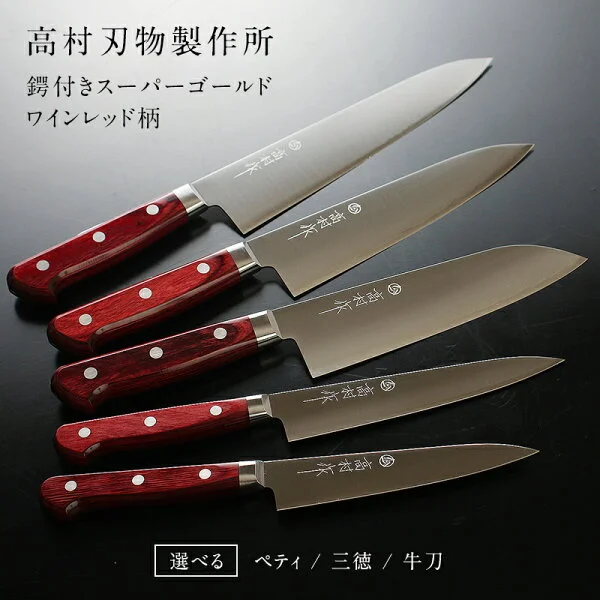
- SG2 (often marketed as R2) is the most popular powdered steel in Japanese kitchen knives. It achieves remarkable hardness while maintaining stainless properties — the best of both worlds. The Takamura R2 gyuto is a legendary example of what this steel can do: laser-thin geometry with an edge that stays sharp through weeks of professional use. The Kurosaki Senko line also demonstrates SG2’s versatility in a more robust blade profile.
- Best for: Enthusiasts who want top-tier performance with stainless convenience. The go-to upgrade from VG-10.
HAP40
- Hardness: HRC 66-68
- A high-speed powdered steel from Hitachi, originally developed for industrial cutting tools. HAP40 achieves extraordinary hardness and edge retention but is very difficult to sharpen — diamond stones or CBN stones are recommended. It is not fully stainless. Primarily used by a few specialty makers.
- Best for: Enthusiasts obsessed with edge retention who own advanced sharpening equipment.
ZDP-189
- Chromium: ~20%, Carbon: ~3%
- Hardness: HRC 66-68
- The hardest stainless steel commonly used in kitchen knives. ZDP-189 has astonishing edge retention but is notoriously chippy at full hardness and extremely challenging to sharpen. Most makers heat-treat it to HRC 64-66 for practical use, which sacrifices some edge retention for improved toughness.
- Best for: Collectors and steel enthusiasts. Not recommended as a first or only knife.
How to Choose Your Steel
First Japanese Knife
Start with VG-10. It is forgiving, performs well, and teaches you Japanese knife care without the anxiety of rust. The Tojiro DP gyuto is the classic recommendation for good reason.
Upgrading from VG-10
Move to SG2/R2 for a significant step up in edge retention while staying stainless. The Takamura R2 gyuto is one of the best values in the knife world.
Exploring Carbon Steel
Start with White #2 for the purest carbon experience, or Blue #2 for better edge retention. Accept that you will need to dry your knife immediately after use and embrace the patina.
Maximum Performance
Aogami Super for carbon lovers, SG2 for stainless preference, or ZDP-189 if edge retention is your singular obsession and you own diamond stones.
Final Thoughts
Steel choice is deeply personal and there is no objectively “best” steel. A White #2 knife sharpened to perfection will outcut a dull SG2 knife every time. The best steel is the one that matches your maintenance habits, sharpening skills, and cutting needs. Start with something forgiving, learn to maintain it properly, and let your preferences guide you from there.
🔪 この記事で紹介した包丁