Guide
The Ultimate Japanese Knife Buying Guide for Beginners
Published: 2026-04-08 · Updated: 2026-04-08
Buying your first Japanese knife is exciting, but the sheer number of options can be overwhelming. Different blade shapes, exotic steel names, handle styles, and price points ranging from $30 to $3,000 — where do you even start?
This guide breaks everything down into simple, actionable decisions. By the end, you will know exactly what type of knife to buy, what steel to choose, and which specific knives offer the best value at every price point.
Part 1: Understanding Knife Types
Japanese knives come in dozens of specialized shapes, but as a beginner, you only need to know about five. Each serves a different purpose in the kitchen, and understanding them will help you pick the right first knife.
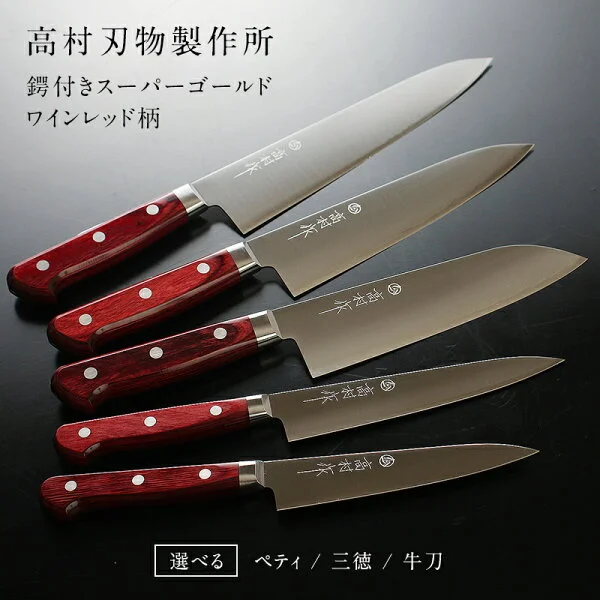
Gyuto (牛刀) — The All-Rounder
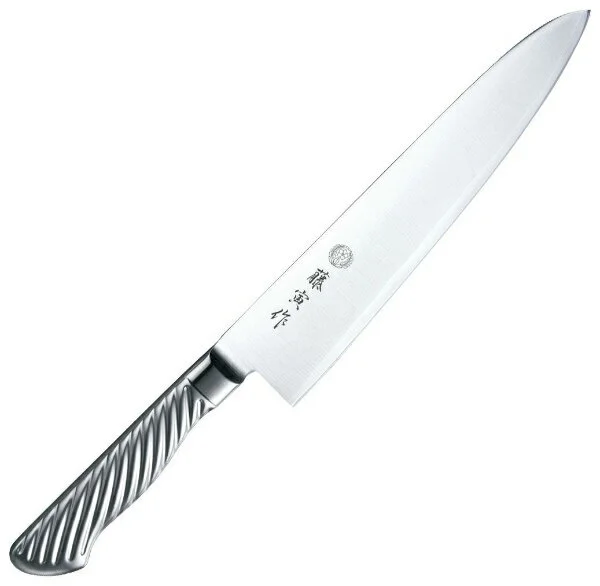
The gyuto is the Japanese equivalent of a Western chef’s knife and the single most versatile knife you can own. It handles everything from mincing garlic to breaking down a chicken to slicing fish for sashimi. The blade curves gently toward the tip, allowing both push-cutting and rock-chopping motions.
Blade length: 180mm, 210mm, or 240mm. For most home cooks, 210mm is the sweet spot — long enough to handle large vegetables but not so long that it feels unwieldy.
Best for: Anyone who wants one knife that does everything. If you are buying your first Japanese knife, start here.
Santoku (三徳) — The Home Kitchen Favorite
The name “santoku” means “three virtues,” referring to its ability to handle meat, fish, and vegetables. It is shorter and wider than a gyuto, with a flatter profile and less pronounced tip. The santoku is the most popular knife in Japanese home kitchens.
Blade length: 165mm or 180mm. The shorter length makes it ideal for cooks with smaller hands or limited counter space.
Best for: Home cooks who prefer a compact, maneuverable knife and primarily use an up-and-down chopping motion rather than rocking.
Petty (ペティ) — The Precision Tool
A petty knife is a small utility knife used for detail work — peeling fruit, trimming vegetables, deveining shrimp, or any task that requires precision. Think of it as the Japanese version of a paring knife, but slightly longer and more versatile.
Blade length: 120mm to 150mm. A 150mm petty is the most versatile size, bridging the gap between a paring knife and a short gyuto.
Best for: A second knife to complement your gyuto or santoku. Not recommended as your only knife.
Nakiri (菜切り) — The Vegetable Specialist
The nakiri is a double-edged vegetable knife with a tall, rectangular blade. Its flat profile makes full contact with the cutting board, producing clean, even cuts through vegetables. If you do a lot of vegetable prep — julienning carrots, shredding cabbage, dicing onions — a nakiri is a joy to use.
Blade length: 165mm is standard.
Best for: Vegetable-heavy cooking, meal prep, or anyone who wants a specialized complement to their main knife.
Bunka (文化) — The Stylish Multi-Tasker
The bunka is similar to a santoku but features a distinctive pointed tip (called a “k-tip” or reverse tanto). This tip excels at detailed work and scoring, giving the bunka slightly more versatility than a santoku. It has become increasingly popular among home cooks who want a knife that looks as good as it performs.
Blade length: 165mm to 180mm.
Best for: Cooks who want the versatility of a santoku with a more agile tip for precision work.
Which Type Should You Buy First?
For most beginners, the answer is clear:
- Gyuto 210mm — if you want maximum versatility
- Santoku 165-180mm — if you prefer a shorter, wider blade
- Everything else — add later once you know what you need
A single good gyuto or santoku will cover 90% of your kitchen tasks. Resist the temptation to buy a full set. It is far better to own one excellent knife than five mediocre ones.
Part 2: Understanding Steel
Steel is what separates a Japanese knife from its Western counterparts. Japanese knives use harder steels that can be sharpened to a finer edge, but each steel type comes with trade-offs in durability, maintenance, and price. Here are the steels you are most likely to encounter.
Stainless Steels — Low Maintenance, Great Performance
VG-10
VG-10 is the most popular stainless steel in Japanese knives and an excellent choice for beginners. It takes a sharp edge, holds it reasonably well, and resists rust and corrosion. You will find it in knives from brands like Shun, Tojiro, and MAC.
- Hardness: 60-61 HRC
- Edge retention: Good
- Ease of sharpening: Easy to moderate
- Corrosion resistance: Excellent
- Price range: Budget to mid-range ($50-$200)
- Verdict: The safe, reliable choice. Hard to go wrong with VG-10.
AUS-10
Similar to VG-10 but slightly softer, AUS-10 is found in many budget-friendly Japanese knives. It sharpens easily and offers good corrosion resistance, making it a forgiving steel for beginners.
- Hardness: 59-60 HRC
- Edge retention: Moderate
- Ease of sharpening: Easy
- Corrosion resistance: Excellent
- Price range: Budget ($30-$100)
SG2 / R2 (Super Gold 2)
SG2 is a powdered metallurgy stainless steel that outperforms VG-10 in almost every way. It gets sharper, stays sharp longer, and maintains excellent corrosion resistance. The trade-off is higher price and slightly more difficulty in sharpening.
- Hardness: 63-64 HRC
- Edge retention: Excellent
- Ease of sharpening: Moderate
- Corrosion resistance: Excellent
- Price range: Mid to high ($150-$400)
- Verdict: The upgrade pick. If your budget allows, SG2 is worth the premium.
Carbon Steels — Maximum Sharpness, More Maintenance
Carbon steels can achieve the sharpest edges possible, but they will rust and develop a patina if not dried immediately after use. Many professional chefs and knife enthusiasts prefer carbon steel for its unmatched cutting feel and ease of sharpening.
White Paper Steel (Shirogami / 白紙)
White paper steel is pure, simple carbon steel with no added alloys. It takes an incredibly keen edge and is the easiest steel to sharpen. However, it has zero corrosion resistance and will rust if you look at it wrong.
- White #1: Hardest of the white steels (65-67 HRC). Takes the finest edge but is the most brittle.
- White #2: Slightly softer (62-65 HRC). Easier to sharpen and more forgiving. The most popular white paper steel.
- Ease of sharpening: Extremely easy — the benchmark all other steels are measured against
- Corrosion resistance: None. Will rust and discolor immediately.
- Price range: Budget to mid-range ($60-$250)
- Verdict: For those who enjoy the ritual of knife care and want the sharpest possible edge.
Blue Paper Steel (Aogami / 青紙)
Blue paper steel adds tungsten and chromium to the base white steel composition, improving edge retention and adding slight toughness. It is still a carbon steel and will rust, but the edge lasts noticeably longer than white paper.
- Blue #2: The workhorse. Better edge retention than White #2 with nearly as good sharpening ease (62-64 HRC).
- Blue Super (Aogami Super): The premium option. Adds molybdenum and vanadium for even better edge retention (64-66 HRC). Often considered the best overall carbon steel.
- Ease of sharpening: Easy (slightly harder than white steel)
- Corrosion resistance: Minimal. Still rusts, but slightly less reactive than white steel.
- Price range: Mid-range ($100-$350)
- Verdict: The best balance of performance and maintenance for carbon steel lovers.
Steel Comparison at a Glance
| Steel | Hardness (HRC) | Edge Retention | Sharpening | Rust Resistance | Best For |
|---|---|---|---|---|---|
| AUS-10 | 59-60 | Moderate | Easy | High | Budget stainless picks |
| VG-10 | 60-61 | Good | Easy-Moderate | High | Reliable all-rounder |
| SG2/R2 | 63-64 | Excellent | Moderate | High | Premium stainless |
| White #2 | 62-65 | Good | Very Easy | None | Sharpest edge possible |
| Blue #2 | 62-64 | Very Good | Easy | Low | Best carbon all-rounder |
| Blue Super | 64-66 | Excellent | Moderate | Low | Premium carbon |
Which Steel Should You Choose?
Ask yourself one question: Are you willing to dry your knife immediately after every use and accept that it will change color over time?
- Yes → Carbon steel (White #2 for sharpness, Blue #2 for edge retention)
- No → Stainless steel (VG-10 for value, SG2 for performance)
There is no wrong answer. Both categories produce exceptional knives. But if you are unsure, start with stainless. You can always add a carbon steel knife later once you understand the maintenance involved.
Part 3: Handle Styles
Japanese knives come with two handle styles, and your preference will significantly affect comfort and control.
Wa-Handle (Japanese Style)
Traditional Japanese handles are typically made of wood (ho wood, magnolia, or premium options like ebony and cherry bark). They are octagonal, D-shaped, or round in cross-section, lightweight, and balanced toward the blade.
Pros:
- Very lightweight — reduces fatigue during long prep sessions
- Blade-forward balance for precise cutting
- Can be replaced when worn out
- Feels distinctly Japanese
Cons:
- Wood requires occasional oiling
- Not dishwasher safe (but you should never put any good knife in a dishwasher)
- Takes getting used to if you have only used Western knives
Yo-Handle (Western Style)
Western-style handles are typically made of pakkawood, micarta, or plastic composite. They are riveted to a full or partial tang and feel familiar to anyone who has used European kitchen knives.
Pros:
- Familiar, ergonomic shape
- Generally more durable and weather-resistant
- Heavier, which some cooks prefer for rocking cuts
Cons:
- Heavier overall knife weight
- Cannot be replaced (if the handle cracks, the knife is compromised)
- Less “authentic” feel, if that matters to you
Which Handle Should You Choose?
If you are coming from Western knives and want a smooth transition, a yo-handle will feel immediately comfortable. If you are drawn to the Japanese knife aesthetic and want the lightest possible knife, try a wa-handle. Neither is objectively better — it is purely personal preference.
Part 4: What to Look For (and What to Avoid)
Signs of a Quality Japanese Knife
- Thin blade geometry: Japanese knives should be noticeably thinner than Western knives. A thick Japanese knife misses the entire point.
- Proper heat treatment: Look for hardness ratings of 58+ HRC. Below 58, the steel is too soft to hold a fine Japanese-style edge.
- Clean fit and finish: No gaps between the handle and blade, no rough spots on the spine, no uneven grind.
- Established brand or maker: Stick with reputable names, especially as a beginner.
Red Flags to Avoid
- “67-layer Damascus” with no mention of the core steel: Damascus cladding is decorative. What matters is the core steel. If a listing only talks about layer count and not the actual cutting steel, be suspicious.
- Unrealistically low prices: A legitimate Japanese knife with decent steel will cost at least $40-50. If it seems too good to be true, it probably is.
- Amazon mystery brands: Countless brands sell cheap knives with Japanese-sounding names and flashy Damascus patterns. These are almost always low-quality Chinese-made knives with poor steel and heat treatment.
- Full knife sets: Japanese knife sets are almost always a bad deal. You end up with knives you do not need and the quality of each individual knife suffers. Buy one or two excellent knives instead.
Part 5: Recommended Knives by Budget
Under $50 — The Entry Point
Tojiro DP Series (VG-10) — The most recommended budget Japanese knife in existence, and for good reason. The Tojiro DP gyuto in 210mm offers legitimate VG-10 steel with decent heat treatment, thin geometry, and a comfortable Western handle. It does not have the fit and finish of more expensive knives, but the cutting performance punches well above its price.
Victorinox Fibrox Pro 8” — Not technically a Japanese knife, but worth mentioning. If your budget is truly limited, the Victorinox is the best-performing knife under $40, period. It will not give you the Japanese knife experience, but it cuts well and is nearly indestructible.
$50-$150 — The Sweet Spot
This is where Japanese knives start to shine. You get better steel, improved fit and finish, and noticeably thinner geometry.
Fujiwara FKM (Molybdenum Steel, ~$60-80): A step up from the Tojiro with better blade geometry and a more refined feel. The steel is simple but effective, and the knife sharpens beautifully. An under-the-radar gem.
MAC Professional Series (MAC Steel, ~$100-140): MAC knives have a cult following for good reason. The proprietary steel takes and holds an excellent edge, the factory edge is razor sharp out of the box, and the thin profile makes cutting effortless. The MAC Professional 8.5” gyuto is arguably the best value in Japanese knives.
Takamura VG-10 Migaki (~$80-120): Takamura is known for exceptionally thin blades. Their VG-10 line offers laser-like cutting performance at a reasonable price. Be aware that the thin edge is more delicate and requires careful use — no twisting or prying.
$150-$300 — The Enthusiast Range
At this price point, you get premium steels, better handle materials, and knives from well-known Japanese blacksmiths.
Takamura R2/SG2 Migaki (~$150-180): Same incredible thin geometry as the VG-10 version but with SG2 steel that holds its edge significantly longer. One of the most popular knives in the enthusiast community.
Gesshin Stainless (by Japanese Knife Imports, ~$150-200): Designed specifically for the Western market with input from professional chefs. Excellent steel, comfortable handle, and outstanding blade geometry. Available in both wa and yo-handle versions.
Ikazuchi by Japanese Knife Imports (~$200-250): A blue #2 carbon steel knife with a stainless cladding that protects most of the blade from rust. You get the cutting feel of carbon steel with significantly reduced maintenance. Available in gyuto and petty profiles.
Yoshimi Kato SG2 (~$200-280): Beautiful tsuchime (hammered) finish with SG2 core steel. Excellent cutting performance with striking aesthetics. A knife you will want to show off.
$300+ — The Premium Tier
At this level, you are paying for master-level craftsmanship, rare steels, and exceptional attention to detail.
Shibata Kotetsu R2 (~$300-350): A competition-level gyuto with incredibly thin geometry and outstanding SG2 steel. The AS (aogami super) version is also available for carbon steel enthusiasts. Widely regarded as one of the best production gyutos available.
Mazaki White #2 (~$300-400): A hand-forged carbon steel knife from a highly respected blacksmith. The blade geometry is outstanding, and the simplicity of white paper steel makes it an absolute joy to sharpen. For those who appreciate the craft of traditional Japanese bladesmithing.
Catcheside (~$400-600): An Australian maker producing Japanese-style knives with exceptional fit and finish. Custom-level quality at semi-production prices. Long wait times but worth the patience.
Part 6: Essential Accessories
Whetstone (#1000 Grit)
You need a sharpening stone. Period. Do not buy a beautiful Japanese knife and then neglect its edge. A Shapton Kuromaku 1000 or King 1000 is all you need to start. Budget $20-40 for a quality stone.
Cutting Board
Use a soft wood (hinoki, rubber wood) or quality rubber cutting board. Hard materials like glass, marble, bamboo, or ceramic will destroy your edge. An Hasegawa rubber cutting board is the professional standard.
Knife Storage
Never toss your Japanese knife in a drawer. Use a magnetic knife strip (with a wood face, not bare metal), a knife guard/sheath (saya), or a dedicated knife roll. Protecting the edge when not in use is just as important as sharpening.
Final Recommendations: The Three Best Starting Points
If you have read this entire guide and still feel overwhelmed, here are three specific recommendations based on budget:
-
Budget pick: Tojiro DP Gyuto 210mm (~$50). VG-10 steel, Western handle. The no-brainer starter knife.
-
Best value: MAC Professional Gyuto 8.5” (~$130). Exceptional cutting performance, razor-sharp factory edge, proven reliability. The knife most likely to make you fall in love with Japanese knives.
-
Enthusiast pick: Takamura R2 Gyuto 210mm (~$170). SG2 steel, laser-thin geometry, extraordinary cutting feel. Once you use a Takamura, every other knife feels thick.
Buy one good knife, learn to sharpen it on a whetstone, and use it every day. That single knife will teach you more about what you want in a kitchen knife than reading a hundred reviews ever could.
Welcome to the world of Japanese knives. Your cooking is about to change forever.
🔪 この記事で紹介した包丁