Guide
Damascus Japanese Knives: Worth the Money or Just Pretty?
Published: 2026-05-07 · Updated: 2026-05-07
Damascus Japanese Knives: Worth the Money or Just Pretty?
The first time I held a damascus-clad gyuto, I genuinely thought I was holding a better knife. The flowing wave pattern up the blade road looked like something forged by a sword-maker on a misty mountainside, and the price tag — about double what I’d paid for my plain stainless workhorse — seemed to confirm that I was getting more knife for my money. I was half right, half wrong. Three years and a lot of damascus knives later, I want to give you the honest version of this story, because the marketing around damascus is some of the most confused in the entire knife industry.
Here’s the short answer: damascus pattern on a modern Japanese knife is almost entirely cosmetic. The cutting performance comes from the core steel, not the layered cladding. That doesn’t make damascus knives bad or even overpriced — but it does mean you should know exactly what you’re paying for before you spend $300+ on a pattern.
What Damascus Actually Is on a Modern Japanese Knife
The word “damascus” gets used three different ways, and they’re not interchangeable.
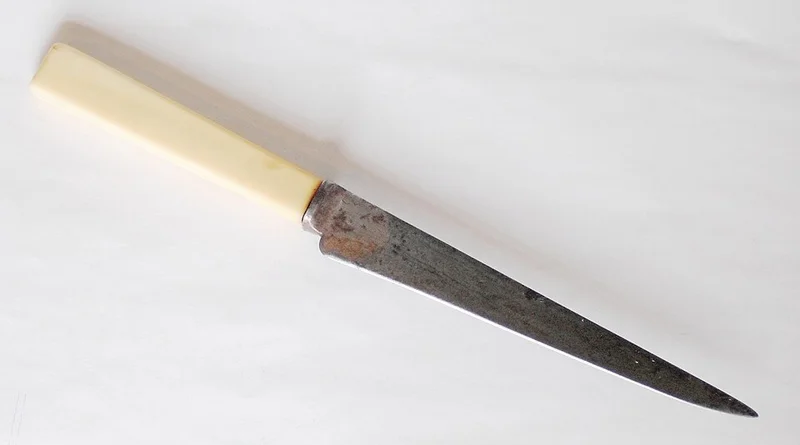
Historical damascus (Wootz steel): A genuinely lost art from medieval Persia and India. The steel itself was crystalline-banded at the molecular level, and the resulting blades were both harder and tougher than contemporary European steel. Real wootz hasn’t been reliably reproduced since the 1700s. No modern knife is made from this.
Pattern-welded steel: Multiple types of steel forge-welded together in many layers, then folded, twisted, or manipulated to produce a visible pattern. This is what historical Japanese swordsmiths did with tamahagane to homogenize impurities. The pattern came from process, not aesthetics. The folding made the blade more uniform.
Modern “damascus” cladding: What you’ll find on 99% of damascus-labeled Japanese kitchen knives today. A hard core steel (the actual cutting edge — VG-10, SG2, Aogami Super, etc.) is sandwiched between many layers of softer stainless or carbon steel that have been pattern-welded for visual effect. The core does the cutting. The damascus layers are jewelry.
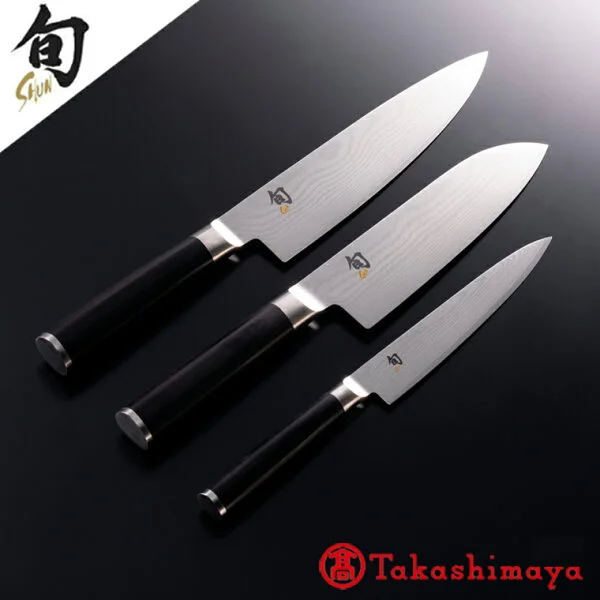
The third category is what we’re talking about when we discuss buying decisions. The damascus pattern on a Shun Classic does nothing for the cutting edge — the VG-10 core is identical to what you’d find on a non-damascus VG-10 knife. The pattern is purely aesthetic. This is not a scam; it’s just how modern damascus knives work, and the marketing rarely makes it clear.
For a deeper dive on what actually drives cutting performance, see the steel guide.
The Performance Question: Does Damascus Cut Better?
In a word: no.
In two more words: it depends — but only in edge cases that don’t affect normal home cooks.
The cutting edge of a damascus-clad knife is whatever the core steel is. If the core is VG-10, you have a VG-10 knife. If the core is SG2/R2, you have an SG2 knife. The 30, 60, or 100 layers of damascus surrounding that core are not in contact with food during normal cuts — they’re on the side of the blade, not the edge.
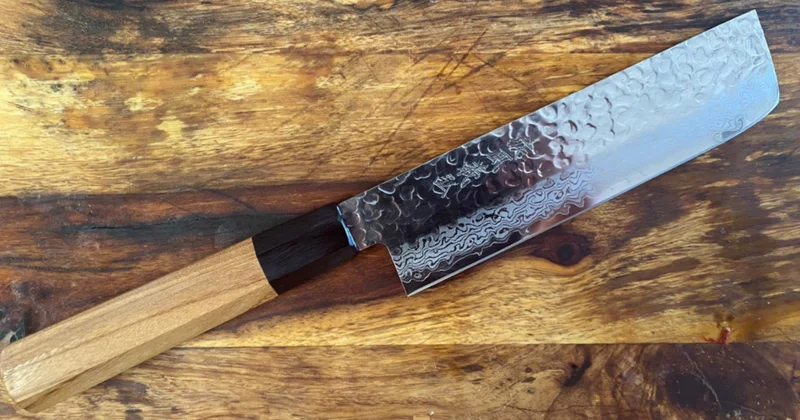
There’s a marginal claim that damascus cladding helps with food release (food sticking to the side of the blade), because the layered surface is slightly less polished and creates micro-air-pockets. In my experience this is real but tiny. A proper hammered (tsuchime) finish on a non-damascus knife releases food just as well. If food release is your priority, look at hammered finish or a kurouchi (black forged) finish before you pay the damascus premium.
There’s also a claim that damascus is “tougher” because it has soft layers that absorb shock. This is true of historical pattern-welded swords but largely irrelevant for kitchen knives. The core steel determines edge retention; the cladding determines side-impact resistance, and you shouldn’t be hitting your kitchen knife sideways anyway.
When Damascus Is Worth the Money
I own three damascus knives and use them regularly, so I’m not anti-damascus. Here’s when I think it’s worth the premium.
As a gift. Damascus knives photograph beautifully and feel premium in the hand. If you’re buying for someone who appreciates craft objects, a damascus knife communicates “this was thoughtful” in a way that a plain stainless knife doesn’t. I gifted a Hattori HD damascus to my brother for his wedding and he still talks about it.
As a once-in-a-lifetime cooking tool. If you cook at home, plan to keep a knife for 20-30 years, and the visual matters to your daily experience, the premium is real but small spread over time. An extra $150 on a knife you’ll use 5,000 times is 3 cents per use.
As a collector or enthusiast. Damascus is a window into traditional Japanese smithing aesthetics. Owning a few well-made damascus knives is a way of engaging with that craft tradition. This is a hobby cost, like coffee equipment or watches, and that’s fine.
As a conversation piece in a working kitchen. I run a small dinner-party setup, and guests notice the damascus knives. It opens conversations about cooking, about craft, about Japanese tradition. That’s worth something.
When Damascus Is Not Worth It
For a workhorse beater knife. If you cook five nights a week and bang through prep, you want a knife you don’t worry about. Damascus knives feel precious; non-damascus knives feel like tools. I reach for a plain Tojiro DP for weeknight prep nine times out of ten. See under-$200 picks for workhorse options.
On a budget under $150. Cheap damascus is almost always worse than non-damascus at the same price point. The manufacturer spent budget on the cladding instead of the core steel, and you end up with a pretty knife that doesn’t cut well. Below $150, get a plain VG-10 or AUS-10 knife from a reputable maker. The cutting experience will be better.
If you don’t notice or care about aesthetics. Some people genuinely don’t see the pattern after a week. If that’s you — and it’s a lot of people — you’re paying for something you’ll never enjoy. There’s no shame in that; just buy a non-damascus knife and put the savings toward a good cutting board or a sharpening stone.
For carbon-only cooks. Most damascus knives have stainless cladding for visual contrast. If you specifically want carbon steel for the patina and reactivity (see carbon vs stainless), damascus options narrow significantly and the ones that exist are very expensive.
My Top Damascus Picks (If You’re Buying)
After cycling through my own collection and a lot of friends’, here are the four damascus knives I’d point you to.
Shun Classic (VG-10 core, ~$165 for 8” gyuto)
The accessible entry point. Shun’s damascus is the most consistent in the industry — the pattern is even, the grind is acceptable for the price, and you can buy it at any Williams Sonoma if you want to handle one before purchasing. The core VG-10 takes a sharper edge than people give it credit for and holds it reasonably well. The downside is that Shun’s grind is slightly thicker behind the edge than premium makers, so you’ll feel more wedge in dense vegetables. As a first damascus, it’s the right answer for most people. Compare with non-damascus options in Shun vs Global vs Miyabi.
Hattori HD (HG damascus, ~$400 for 8” gyuto)
A serious step up. Hattori is a Seki master smith, and his HD line uses Cowry-X core steel (HRC 64+) with hand-hammered damascus cladding. This is where damascus stops being just decoration — the core steel is genuinely premium, and the build quality justifies the price. Edge retention is excellent, the grind is thin and food-releasing, and the knife will last decades with care. If you want one beautiful damascus knife and you can swing the price, this is it.
Yoshimi Kato SG2 Damascus (SG2 core, ~$250 for 8” gyuto)
The performance-per-dollar pick. Yoshimi Kato is a younger smith working out of Takefu, and his SG2 damascus knives offer near-Hattori performance at half the price. The damascus pattern is slightly less refined than Hattori’s, but the cutting edge is razor-thin and the SG2 core holds an edge for a long time. This is what I recommend to friends who want serious damascus without spending $400.
Kurosaki AS Damascus (Aogami Super core, ~$280 for 8” gyuto)
The carbon-core option. Yu Kurosaki is one of the most photographed smiths on knife social media for a reason — his damascus aesthetics are striking, particularly the Senko (“flash”) pattern. The Aogami Super core is reactive carbon steel, so this knife will patina over time and requires more care. But the cutting performance is exceptional, and if you want a damascus knife that’s also a serious cutter, Kurosaki AS is the one. Just understand the carbon steel maintenance commitment first — see the care guide and first-knife considerations.
How to Spot Fake or Poor-Quality Damascus
Damascus is heavily counterfeited and frequently faked. Here’s what I look for.
Acid-etched fake patterns. Some cheap “damascus” knives are actually plain stainless steel with a damascus-looking pattern acid-etched onto the surface. The pattern is identical on both sides of the blade (real damascus shows different patterns on each side because the layers don’t run perfectly parallel). Run your fingernail across the pattern — real damascus has very faint ridges from the differential etching of harder and softer layers; fake damascus is glassy smooth.
Pattern that disappears after sharpening. Real damascus cladding goes deep into the blade. Sharpen it on a stone and the pattern stays intact (because you’re only removing the very edge of the core steel, which is what should be visible at the edge anyway). Fake damascus is surface-only — the pattern wears off the blade road within a year of normal use.
Extreme low prices. A “damascus” gyuto for $40 on Amazon is not real damascus. Real pattern-welded cladding requires skilled labor; the cheapest legitimate damascus knife I’ve seen is around $130, and even that is a stretch. Below $100, assume etched pattern.
Vague core steel descriptions. Reputable damascus makers tell you exactly what the core steel is (VG-10, SG2, Aogami Super, etc.). If a listing says “Japanese damascus steel” with no core specification, the maker is hiding something. Walk away.
Sloppy pattern transitions. On a quality damascus knife, the pattern flows smoothly the full length of the blade and the layer count is consistent. On a poor one, you’ll see abrupt pattern changes, missing sections, or layers that don’t reach all the way to the spine. Look at high-resolution photos before buying online.
Care Considerations
Damascus knives are not more delicate than non-damascus knives in terms of edge — the edge is whatever the core steel is. But there are two damascus-specific care considerations.
The pattern can dull over time. Damascus cladding is etched (chemically darkened in the recessed layers) at the factory to make the pattern visible. Heavy use, dishwasher exposure (which you should avoid anyway), or aggressive cleaning can fade the etching. To restore it, light re-etching with ferric chloride or coffee can darken the pattern again, but this is a project you should research carefully or take to a knife shop.
Sanding scratches show more. A scratch on a plain blade is one line. A scratch across damascus crosses dozens of layers and looks worse. Be more careful about what touches the side of the blade.
Otherwise, treat a damascus knife like any other Japanese knife: hand wash, dry immediately, store on a magnetic strip or saya, avoid bones and frozen food, sharpen on whetstones.
Honest Downsides of My Damascus Knives
To balance everything I’ve said:
- I genuinely cannot tell the difference in cutting performance between my Shun damascus and a comparable non-damascus VG-10 knife. The performance argument for damascus does not hold up in my kitchen.
- The premium I paid for damascus aesthetics is real money. Spread over years it’s small, but it’s not free.
- I worry about scratches more than I would on a beater knife. This shows up as me reaching for the plain knife when I’m in a hurry.
- Photographing them is harder than people think. Good lighting brings out the pattern; bad kitchen lighting flattens it.
- My carbon damascus (Kurosaki AS) requires more care than I expected. The patina interacts with the pattern in unpredictable ways and some people will hate the look after six months. I’ve grown to like it.
I still buy damascus occasionally. But I no longer think of it as “better.” I think of it as “different and beautiful,” which is a fine reason to spend money on a tool you’ll use thousands of times.
FAQ
Q: Does damascus mean the knife is hand-forged? A: Not necessarily. Many damascus knives are made with machine-rolled damascus billets that are then forged or stock-removed into knife shapes. Hand-forged damascus exists but commands a much higher price.
Q: Will the damascus pattern wear off? A: The pattern is etched into multi-layer steel, so it’s permanent for the life of the blade — unlike a coating. The visual contrast (darker recessed layers) can fade with heavy polishing or aggressive cleaning, but the layered structure is real and stays.
Q: Is damascus harder to sharpen? A: No. You’re sharpening the core steel at the edge, not the cladding layers. The sharpening experience is identical to a non-damascus knife with the same core steel. See how to sharpen a Japanese knife.
Q: Why do some damascus knives look so different from each other? A: Different smiths use different layer counts, manipulation techniques (twist, raindrop, ladder, suminagashi), and base steels. A 33-layer raindrop pattern looks completely different from a 67-layer suminagashi. None is objectively better — it’s aesthetic preference.
Q: Are higher layer counts better? A: No. More layers means thinner individual layers, which can show a finer pattern but doesn’t improve cutting. Some of the most beautiful damascus is in the 30-50 layer range, with bold contrast. Layer-count marketing past 100 is mostly numbers theater.
Q: Should my first Japanese knife be damascus? A: Probably not. Spend your first $200-300 on a workhorse non-damascus knife from a reputable maker, learn how to use and maintain it, then decide whether you want damascus as a second knife. See how to choose your first Japanese knife.
Q: Is damascus food-safe? A: Yes. The cladding layers are food-grade stainless or carbon steel, same as non-damascus knives. Some people worry about the etching chemicals, but those are removed in finishing and the resulting steel surface is inert.
Q: Can I get damascus repaired if it’s chipped? A: A chip in the edge is a chip in the core steel, repaired by sharpening. A chip into the damascus cladding above the edge is harder to fix invisibly, because the layered structure is exposed. Knife shops can grind it down and re-etch, but cosmetic perfection is hard to restore. Avoid the chip in the first place.
Bottom Line
Damascus is beautiful. Damascus is, on a modern Japanese knife, mostly aesthetic — the cutting performance is determined by the core steel underneath the pattern, and you can get equal cutting performance from a plain knife at lower cost. That doesn’t make damascus a bad purchase; it makes it a specific kind of purchase. Buy it for the aesthetics, the gift value, the craft, the conversation. Don’t buy it expecting it to cut better than a non-damascus knife with the same core steel, because it won’t.
If you want one damascus knife to keep forever, the Hattori HD is my top recommendation. If you want damascus on a tighter budget, the Shun Classic is the consistent default. If you want damascus performance approaching the high end at mid-tier pricing, look at Yoshimi Kato. And if you want carbon-core damascus that will patina with you over the years, Kurosaki AS is one of the most beautiful tools you can own.
For more on what actually drives cutting performance, the steel guide is the right next read. To zoom out to the broader buying decision, the main buying guide covers the full landscape.
🔪 この記事で紹介した包丁