Knife Types
Best Petty Knives: The Essential Japanese Utility Knife Guide
Published: 2026-04-10 · Updated: 2026-04-10
Every well-equipped kitchen needs a petty knife. While the gyuto handles the heavy lifting and the nakiri dominates vegetable prep, there is an entire category of tasks that neither can perform comfortably. Peeling ginger, deveining shrimp, segmenting citrus, trimming silverskin from a tenderloin — these are petty knife territory.
What Is a Petty Knife?
The petty knife is Japan’s answer to the Western utility knife, but it is typically thinner, sharper, and more precisely ground. The name comes from the French word “petit,” meaning small. Most petty knives measure between 120mm and 150mm, placing them squarely between a paring knife and a short gyuto.
Unlike a paring knife, which is designed almost exclusively for in-hand work, a petty knife is long enough to use comfortably on a cutting board. This dual-purpose capability is what makes it so valuable. You can peel an apple in your hand, then set it on the board and slice it into thin wedges — all with the same knife.
Why You Need a Petty Knife
If you already own a gyuto, you might wonder why you need another knife. The answer becomes obvious the moment you try to mince a single clove of garlic with a 210mm blade, or peel a kiwi, or trim the fat cap on a steak. Your gyuto can technically do these things, but it feels awkward and oversized for the task.
A petty knife fills every gap below your main knife’s comfortable range. Professional kitchens consider it essential — most line cooks carry a petty alongside their chef’s knife, and many reach for it more often than they expect.
How to Choose a Petty Knife
Blade Length
The two most common sizes are 120mm and 150mm, and the choice matters more than you might think.
120-130mm: Better for in-hand work like peeling, trimming, and deveining. Feels more like an oversized paring knife. Choose this if your petty will primarily be a hand tool.
150mm: More versatile. Long enough to handle board work like slicing small vegetables, portioning cheese, or cutting sandwiches. This is the size we recommend for most home cooks, as it covers both in-hand and on-board tasks.
Steel Type
The same steel considerations apply as with any Japanese knife:
- Stainless (VG-10, AUS-10): Low maintenance, good for beginners. Since petty knives handle acidic ingredients frequently, stainless is especially practical here.
- Carbon (Shirogami, Aogami): Superior sharpness for precision work. Best for experienced users who enjoy maintaining their knives.
- Powdered (SG2/R2): Best edge retention with stainless properties. Worth the investment if you use your petty daily.
Handle Style
Most petty knives come with Western (yo) handles, which provide a familiar, balanced grip. Wa-handled petty knives exist but are less common. Either works well — choose based on your preference and what matches the rest of your knife collection.
Our Top Picks
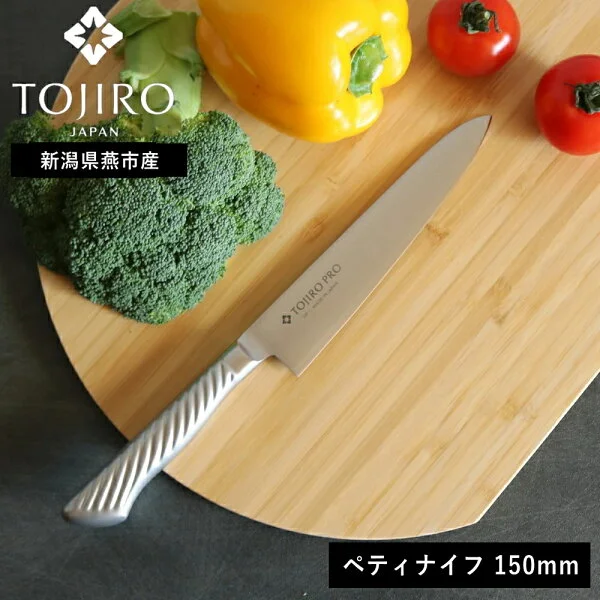
Best Budget: Tojiro DP Petty 150mm (~$40)
The Tojiro DP Petty is the obvious starting point. At just $40, it uses the same VG-10 cobalt alloy construction as the legendary Tojiro DP gyuto that has introduced thousands of cooks to Japanese knives. The 150mm blade handles both board work and in-hand tasks with equal competence.
At 70g, it is light enough for extended detail work without fatigue. The Western-style handle is comfortable and the overall fit and finish is solid for the price. If you own a Tojiro DP gyuto, adding the matching petty is a no-brainer — the consistent steel and handle design mean your sharpening routine stays the same.
Why it wins: Nothing else at this price offers VG-10 steel in a 150mm petty. It is the best value entry into Japanese petty knives, period.
Best Budget Runner-Up: MAC Professional Petty 135mm (~$50)
MAC knives have a devoted following among professional chefs, and their petty is no exception. The proprietary high-carbon stainless steel arrives razor-sharp out of the box — sharper than most knives in this price range. At 135mm, it splits the difference between a paring knife and a utility knife.
The pakkawood handle is comfortable for long prep sessions, and the thin blade geometry means the knife glides through ingredients rather than pushing through them. If you already own and love a MAC gyuto, this petty is the natural companion.
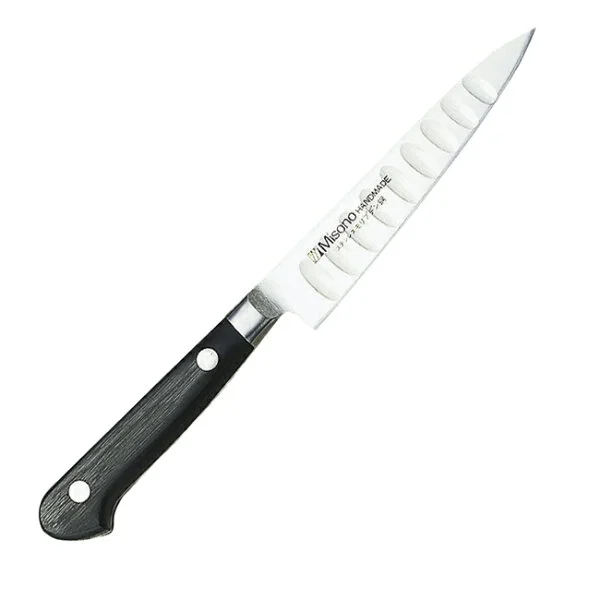
Best Mid-Range: Misono Molybdenum Petty 130mm (~$65)
Misono is the brand that Japanese culinary students aspire to own, and their Molybdenum petty demonstrates why. The AUS-10 stainless steel offers reliable corrosion resistance with decent edge retention. At 130mm, this is a compact petty optimized for precision tasks like trimming, peeling, and detail garnish work.
The fit and finish represent a clear step up from budget options. The blade is ground thinner, the handle sits more comfortably in hand, and the overall balance is noticeably better. For professional kitchen use where the petty gets heavy daily rotation, the Misono is built to endure.
Best Premium Stainless: Takamura R2 Petty 130mm (~$110)
The Takamura R2 Petty is a scalpel for the kitchen. At only 55g with SG2 powdered steel hardened to 63-64 HRC, it is one of the sharpest and lightest petty knives ever made. The blade is ground impossibly thin, which means it cuts through food with almost zero resistance.
Paired with the Takamura R2 Gyuto, these two knives form what many enthusiasts consider the ultimate two-knife set. The SG2 steel holds its edge through weeks of daily use, and when it does need sharpening, it responds well to a 1000-grit whetstone.
Why it wins: If you want the absolute best cutting performance in a compact knife, the Takamura R2 Petty is in a class of its own. Once you use it, every other petty feels thick and clumsy.
Best Premium Wa-Handle: Ryusen Blazen Petty 150mm (~$180)
For those who want a petty knife that is both a high-performance tool and a work of art, the Ryusen Blazen delivers on both fronts. SG2 powdered steel at 63-64 HRC provides exceptional edge retention. The stunning Damascus cladding and traditional wa-handle with buffalo horn ferrule make this a knife you will want to display on a magnetic strip.
At 150mm with a wa-handle, this petty is lightweight and blade-forward in balance, giving you precise control during delicate cutting work. It is an investment, but one that rewards you every time you pick it up.
Best Carbon Steel: Sugimoto CM Petty 120mm (~$55)
Sugimoto is the knife of Tsukiji and Toyosu fish markets. Their CM (Carbon Master) petty uses high-carbon steel that takes an incredibly sharp edge — the kind of sharpness that stainless steel simply cannot replicate. At 120mm, it is optimized for in-hand precision work.
The trade-off is maintenance. This blade will rust if you leave it wet, and it will develop a patina from the first onion you cut. But if you are willing to dry it immediately after use and embrace the character that builds over time, the cutting experience is genuinely special.
Petty Knife Techniques
A petty knife is versatile enough for multiple grip styles:
Board Work
Use a standard grip with your index finger and thumb pinching the blade just ahead of the handle. The petty excels at slicing small ingredients like shallots, garlic, strawberries, and mushrooms. The short blade gives you more control than a full-sized chef’s knife for these tasks.
In-Hand Work
Grip the handle and use your thumb on the spine of the blade for control. Peel fruits and vegetables by drawing the blade toward your thumb in controlled strokes. This is the classic paring technique, and a 150mm petty handles it beautifully.
Detail Garnish
For brunoise, fine julienne, and decorative cuts, the petty knife’s compact size and thin blade are ideal. Many professional cooks prefer a petty over a gyuto for any precision cut smaller than a centimeter.
Care Tips
Petty knives follow the same care rules as any Japanese knife, with one additional consideration: because they handle acidic ingredients frequently (citrus, tomatoes, vinegar), stainless steel petty knives benefit from a quick rinse between ingredients to prevent spotting.
- Hand wash only. The thin blade is especially vulnerable to dishwasher damage.
- Dry immediately after washing.
- Sharpen at 15 degrees per side on a 1000-grit whetstone.
- Store with a blade guard or on a magnetic strip. The thin blade chips easily if it knocks against other utensils in a drawer.
The Bottom Line
A petty knife is not a luxury — it is the second most important knife in your kitchen after your gyuto or santoku. It fills every gap that your main knife cannot comfortably reach, and once you have one, you will wonder how you ever managed without it.
Start with the Tojiro DP Petty ($40) if you want a reliable stainless option that punches above its price. Step up to the Takamura R2 Petty ($110) if you want the best cutting experience available in a compact knife. And if you appreciate traditional Japanese craftsmanship and want a petty knife that is also a conversation piece, the Ryusen Blazen ($180) will not disappoint.
🔪 この記事で紹介した包丁