Guide
Best Petty Knives 2026: The Underrated Workhorse Every Cook Needs
Published: 2026-04-29 · Updated: 2026-04-29
I have a confession. For the first three years I owned Japanese knives, I never reached for my petty. It sat in the block, stainless and lonely, while my gyuto did everything from butchering chickens to slicing strawberries. Then one evening I was prepping shallots for a vinaigrette, fumbling my 240mm gyuto over a tiny cutting board, and I finally picked up the little 150mm petty I’d dismissed for years.
I haven’t put it down since.
The petty is the knife I now reach for more than any other in my kitchen. Not the gyuto, not the santoku — the small, sleek, almost forgotten blade that Japanese makers refined over decades for the work that actually fills most of a cook’s day. If you own one good Japanese knife and you’re wondering what to add next, this is the answer. If you don’t own any Japanese knives yet and you’re staring at a new japanese knife buying guide trying to pick a first blade, the petty deserves a much closer look than most beginners give it.
Here’s what I’ve learned about petty knives, what to buy at every budget, and the honest downsides nobody talks about.
What Is a Petty Knife?
The word “petty” comes from the French petit — small. A petty knife is a small Western-style utility blade, typically 120mm to 180mm long, with a pointed tip, a relatively flat edge, and a profile that looks like a miniature gyuto. Think of it as the Japanese answer to a Western utility or paring knife, sharpened with the precision and steel quality you’d expect from a serious chef’s knife.
It’s a double-bevel blade (sharpened on both sides), which means it works equally well for left- and right-handed cooks. The geometry is generally thinner behind the edge than a Western utility knife of similar size, which is the whole point — Japanese pettys glide where Western utilities push.
A few terms worth knowing:
- Petty (ペティ): The Japanese term, used by virtually every maker. Western-style profile, double bevel.
- Utility knife: The Western equivalent. Usually thicker, heavier, less refined geometry.
- Paring knife: Smaller still (75mm-100mm), designed for in-hand work like peeling apples.
- Honesuki / garasuki: Japanese poultry-boning knives. Sometimes confused with petty, but very different.
A petty is not a paring knife and not a utility — it sits in between, and that’s exactly what makes it so useful.
Why Pros Use Petty Knives All Day
Walk into any serious Japanese kitchen and you’ll see a petty in active use, usually clipped to the chef’s apron or sitting blade-up on the cutting board. There’s a reason. Most kitchen prep doesn’t need a 240mm chef’s knife. It needs a sharp, agile blade that can work on a small cutting surface, slip into tight spots, and get out of the way when the gyuto comes back for the heavy lifting.
A petty handles:
- Mincing shallots, garlic, ginger
- Trimming herbs and salad greens
- Hulling strawberries, segmenting citrus
- Slicing cherry tomatoes, fingerling potatoes, baby carrots
- Trimming silver skin off a tenderloin
- Deboning chicken thighs (if you don’t have a honesuki)
- Cutting cheese, butter, charcuterie
- Slicing baguettes for crostini
- In-hand work: peeling apples or potatoes when you don’t want to dirty a board
The list is enormous, and once you start tracking how often you reach for it, you realize most of cooking is small-format work. The big knife is glamorous. The petty does the actual job.
Length Selection: 120mm vs 150mm vs 180mm
This matters more than people think. Get the wrong length and you’ll either feel cramped or feel like you’re holding a small gyuto.
120mm-130mm: True paring territory. Excellent for in-hand peeling, tiny garlic cloves, fine garnish work. Limited on the cutting board — too short for slicing a Roma tomato in one motion. Pick this if you already own a gyuto and want a dedicated detail knife.
150mm: The sweet spot. Long enough to slice a tomato, mince a shallot, or break down a chicken thigh. Short enough to feel nimble and work on a small board. If you’re buying one petty, buy a 150. This is what most pros carry.
180mm: A petty pretending to be a small gyuto. Useful if you cook in a tiny apartment kitchen and want one knife that does everything, or if you have larger hands. Starts to lose the “petty feel” — the tip-led nimbleness — at this length.
For most home cooks, 150mm is the right answer. I own a 150 and a 130, and I reach for the 150 about 90% of the time.
The Best Japanese Petty Knives in 2026
I’ve cooked with most of the knives below for at least a year. The picks at every tier are blades I’d actually buy again, not the cheapest option that ranked well on a metrics sheet.
Under $50: There Isn’t One Worth Buying
Brutal honesty: I haven’t found a Japanese-made petty under $50 that’s worth owning. The geometry, heat treatment, and fit-and-finish all suffer below this price point. If your budget is tight, save for a Tojiro or buy a quality Western utility knife instead. A bad petty is worse than no petty.
Around $80-$100: Tojiro DP 150mm Petty
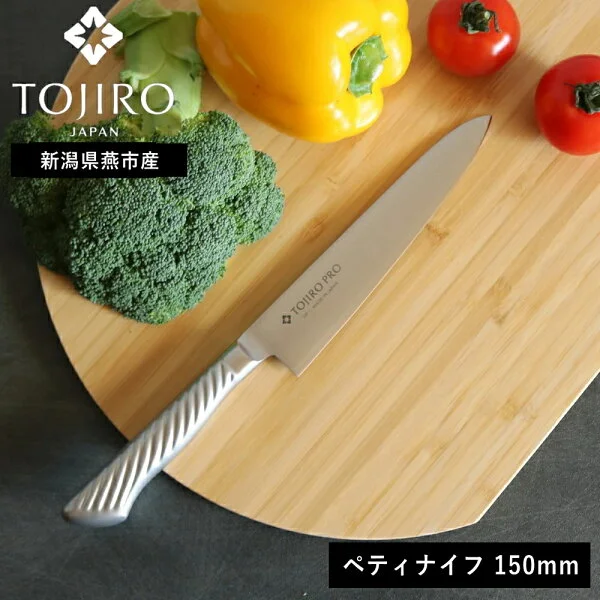
The Tojiro DP F-803 is the petty I recommend more than any other knife. VG-10 core steel, stainless cladding, a Western-style pakkawood handle, and edge geometry that genuinely punches several tiers above its price. It’s not romantic. It won’t make Instagram. But it will outperform a Wüsthof or Henckels utility knife by a wide margin and cost about the same.
I gave one to my brother for Christmas three years ago. He uses it daily. Still scary sharp with basic stropping and minimal honing.
If you’re shopping in this range, also consider it alongside the picks in best Japanese knives under $100.
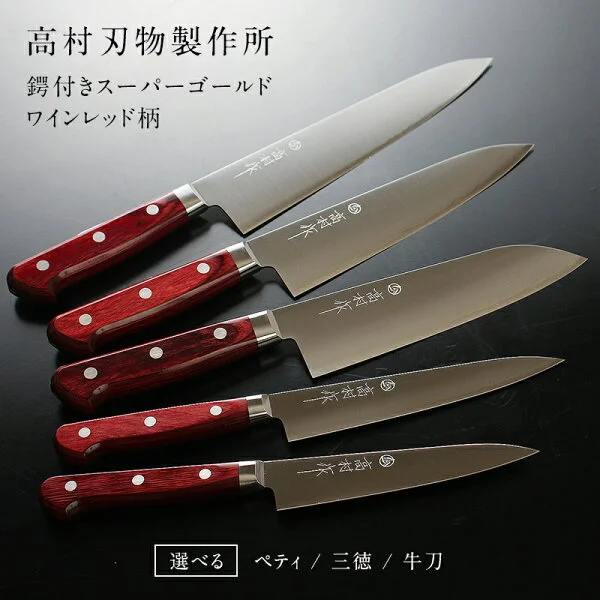
Around $150-$200: Takamura R2 Migaki 130mm Petty
This is the petty that converted me. Takamura is a small workshop in Echizen, Fukui, and they grind R2 (SG2) powder steel thinner than almost anyone in the price range. The 130mm Migaki petty is feather-light, blistering sharp out of the box, and the geometry is so thin you can almost feel it splitting cells rather than cutting them.
The downside: R2 is hard (~63-64 HRC) and the edge is delicate. Don’t bone chickens with it, don’t pry, don’t twist. Treat it like a precision instrument and it will reward you for years.
I keep this one for tomatoes, herbs, and any task where edge feel matters more than durability. It’s a different category of cutting experience from the Tojiro.
Around $200-$300: Sakai Takayuki Ginsan 150mm Petty
If you want a petty with traditional Japanese aesthetics — blonde ho-wood handle, octagonal grip, polished kasumi finish — Sakai Takayuki’s Ginsanko (silver 3) line is hard to beat. Ginsan is a stainless steel that takes a near-carbon-grade edge while staying rust-resistant, which makes it ideal for a petty that lives on the prep counter and gets touched constantly.
The handle change alone is worth the price jump. A wa-handle (Japanese-style) petty feels balanced differently than a Western yo-handle: lighter in the hand, blade-forward, encouraging tip-led work. It’s the kind of knife that rewards the cook who has already developed some technique.
If you’re choosing between styles, my gyuto comparison piece in gyuto vs santoku covers handle preferences in more depth — the same principles apply.
$300+: Misono UX10 150mm Petty
The Misono UX10 is a workhorse pro knife, and the 150mm petty is the version most line cooks own if they own a UX10 at all. Swedish stainless steel, a Western-style handle that’s grippy even with wet hands, and a polish that makes it easy to clean and maintain in a busy kitchen.
It’s not the sharpest petty in this list out of the box (the Takamura wins that), and it’s not the most beautiful (Sakai Takayuki wins there), but it’s the most forgiving high-end petty I’ve used. UX10s are nearly indestructible by Japanese-knife standards. If you cook professionally or you’re hard on your tools, this is the petty that survives.
Comparison Table
| Knife | Length | Steel | Handle | Best For | Approx. Price |
|---|---|---|---|---|---|
| Tojiro DP F-803 | 150mm | VG-10 | Western pakkawood | First petty, daily driver | $80-$100 |
| Takamura R2 Migaki | 130mm | R2 (SG2) | Western | Precision, herbs, soft produce | $150-$200 |
| Sakai Takayuki Ginsan | 150mm | Ginsan (Silver 3) | Wa-handle ho-wood | Traditional feel, edge retention | $200-$300 |
| Misono UX10 | 150mm | Swedish stainless | Western | Pro durability, daily abuse | $250-$320 |
For a deeper look at the steels themselves, my Japanese knife steel guide breaks down VG-10, R2, Ginsan, and the trade-offs between each.
Tasks the Petty Does Best
I’m going to be specific because vague descriptions don’t help anyone choose:
- Shallots and garlic: The petty’s small profile lets you mince on a board the size of a dinner plate. No giant gyuto needed.
- Citrus segmenting: The pointed tip slips between membranes cleanly. A santoku can’t do this without massacring the fruit.
- Hulling strawberries: In-hand work, blade pinched between thumb and forefinger. The 130mm shines here.
- Trimming silver skin: Off pork tenderloin or beef tenderloin. Tip-led, controlled, low-pressure.
- Cherry tomatoes: A long thin petty edge slices cleanly without crushing.
- Herb chiffonade: Basil, mint, sage. The thin geometry doesn’t bruise leaves.
- Apple peeling: When you don’t want to dirty a board. The knife pivots in your hand around the fruit.
Tasks the Petty Does NOT Do Well
This is where most beginner guides go quiet. The petty is not a do-everything knife, and pretending it is will get you frustrated.
- Hard winter squash: Butternut, kabocha, acorn. The blade is too short and too thin. You will chip the edge or drive yourself insane. Use a heavier gyuto or a cleaver.
- Large produce: A whole watermelon, a head of cabbage, a pumpkin. You need length and weight, neither of which a petty has.
- Bone-in poultry: A petty can debone a chicken thigh, but breaking down a whole chicken with the spine intact is a job for a cleaver or a honesuki.
- Frozen food: Don’t. You’ll chip the edge instantly. This applies to any Japanese knife.
- Crusty bread: A petty isn’t serrated. It will tear the crust and squash the crumb.
If you understand these limits, the petty becomes a precision tool that complements a larger knife. If you don’t, it becomes a frustrating substitute for the wrong job.
Care: A Petty Is Not Indestructible
Japanese pettys are thinner than their Western counterparts, and many use harder steel. That’s the source of their cutting performance and the source of their fragility. Treat yours like this:
- Hand wash, dry immediately. Never the dishwasher. Carbon steels will rust within hours; even stainless won’t survive detergent and heat cycles long-term.
- Use a wood or hi-soft cutting board. Glass, ceramic, or steel will destroy any Japanese edge. My piece on best cutting boards for Japanese knives covers this in detail elsewhere on the site.
- Hone with a ceramic rod weekly, sharpen on a whetstone every few months. Don’t use a pull-through sharpener. Don’t use a steel honing rod from a Western knife set.
- Store properly. A magnetic strip, knife block with vertical slots, or a saya (wooden sheath) all work. A drawer full of metal utensils will trash the edge.
- Don’t pry, twist, or hit bones. The petty is not a tool for force.
If you do these five things, a quality petty will outlast most of the appliances in your kitchen.
FAQ
Is a petty knife the same as a paring knife? No. A paring knife is shorter (75mm-100mm) and designed primarily for in-hand peeling and detail work. A petty is longer (120mm-180mm) and works on a cutting board as well as in hand. The petty is more versatile; the paring knife is more specialized.
Do I need a petty if I already own a gyuto and santoku? Yes, if you regularly prep small ingredients (shallots, herbs, garlic, citrus) or work on a small cutting board. The petty fills a real gap between paring and chef-knife duties. If you only cook in big batches with large produce, you can skip it.
What’s the best petty knife for beginners? The Tojiro DP 150mm. Forgiving steel, durable geometry, easy to sharpen, hard to damage. It’s also the knife I recommend in best Japanese knives for beginners 2026 for cooks who want one mid-range Japanese knife without the maintenance burden of carbon steel.
Petty in carbon steel or stainless? Stainless for almost everyone. The petty is the knife you’ll grab fastest, often with wet hands or after handling acidic ingredients (citrus, tomatoes, onions). Carbon steel pettys exist and they’re beautiful, but the maintenance is unforgiving on a knife you’ll touch fifty times a meal.
Can I use a petty to butcher chicken? For boneless chicken thighs and breasts, yes. For whole-chicken breakdown with the spine intact, no — use a cleaver or honesuki. A petty can technically do it, but you’ll abuse the edge.
Is 150mm too small to be a primary knife? For most people, yes. A 150mm petty is excellent as a second or third knife but not as your only blade. If you want one knife to do everything, choose a 180mm-210mm gyuto or santoku. My piece on how to choose your first Japanese knife walks through this decision.
Are expensive pettys actually better? Up to about $200, yes — meaningful differences in steel, geometry, and finish. Above $300, you’re paying for craftsmanship, aesthetics, and small marginal performance gains. A $400 petty cuts maybe 5% better than a $200 petty if you have the technique to feel the difference.
How often should I sharpen a petty knife? Light home use: every 3-6 months on a 1000/4000 grit whetstone, with weekly honing on a ceramic rod between sharpenings. Heavy use (cooking daily for a family): every 2-3 months. If your tomatoes start crushing instead of slicing, it’s time.
Honest Downsides
I love my pettys, but they’re not for everyone. Some real drawbacks:
- You will probably still need a larger knife. A petty is a complementary tool. If you can only own one Japanese knife, make it a gyuto or santoku.
- The good ones aren’t cheap. A Tojiro DP at $90 is the realistic entry point. Below that, quality drops fast.
- Thin geometry is fragile. R2 and SG2 pettys will chip if you torque them. Beginners with heavy hands should start with VG-10 or AUS-10.
- It’s not exciting on Instagram. A 240mm gyuto with a damascus pattern photographs better than a 150mm petty. If knife aesthetics matter to you, this isn’t the showpiece.
My Take
If you’ve already got a chef’s knife you love and you’re wondering what to add next, a petty is the highest-leverage purchase in Japanese cutlery. It will change how you prep more than any second gyuto, any santoku, any specialty knife. Pros use them all day for a reason: small-format work fills most of cooking, and a petty does small-format work better than anything else in the drawer.
Start with a Tojiro DP 150mm if you want a daily driver that won’t break the bank. Upgrade to a Takamura R2 or Sakai Takayuki when you’ve developed the technique to feel the difference. The Misono UX10 is the answer if you cook professionally or you’re hard on your tools.
Whichever you choose, you’ll wonder how you cooked without one.
🔪 この記事で紹介した包丁