Budget Picks
Best Japanese Knives Under $100: Maximum Performance, Minimum Spend
Published: 2026-04-10 · Updated: 2026-04-10
The under-$100 category is where Japanese knives deliver the most dramatic upgrade over Western kitchen knives. A $55 Tojiro DP will outcut a $150 German chef’s knife in almost every task. A $70 Masahiro MV is the same knife that Japanese culinary students train with every single day. This is the price range where you get serious performance without serious financial commitment.
If you are reading this, you are probably in one of two situations: you are buying your first Japanese knife and want to spend wisely, or you already own one and want to expand your collection without overspending. Either way, every knife on this list has been chosen because it delivers genuine Japanese knife performance — thin blades, hard steel, and keen edges — at a price that makes the decision easy.
What to Expect Under $100
At this price point, you are getting knives that are genuinely excellent, not merely “good for the price.” Here is what defines the category:
Steel quality: Most knives in this range use VG-10, AUS-10, or proprietary stainless alloys hardened to 58-61 HRC. These are real Japanese knife steels that take and hold a sharp edge.
Blade geometry: Noticeably thinner than Western knives of equivalent price. You will feel the difference the first time you slice an onion.
Fit and finish: Functional but not flashy. You will not find Damascus cladding or hand-hammered finishes here, but the grind is competent and the handle is comfortable.
What you sacrifice: The finer details. Handle materials are basic, blade geometry is good but not laser-thin, and the factory edge may need a quick touchup on a whetstone. These are trade-offs you can live with happily.
Best Gyuto (Chef’s Knife) Under $100
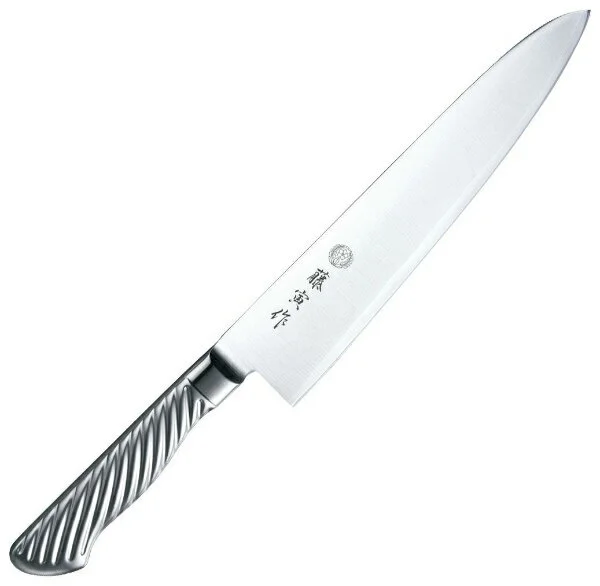
Tojiro DP Cobalt Alloy Gyuto 210mm — $55
There is no getting around it: the Tojiro DP is the most important knife on this list and possibly the most recommended Japanese knife in existence. VG-10 cobalt alloy steel in a three-layer construction, hardened to 60-61 HRC, ground reasonably thin, with a comfortable Western handle. It does everything a gyuto should do and costs less than dinner for two.
The Tojiro DP has been the “gateway knife” for thousands of cooks worldwide, and the reason is simple: it performs far above its price point. The VG-10 core takes a sharp edge on a 1000-grit whetstone in minutes and holds that edge through weeks of home cooking. The blade is 210mm — the ideal length for general kitchen work — and weighs 170g, which gives it enough heft to feel substantial without being heavy.
Is it perfect? No. The fit and finish is utilitarian, the handle material is basic, and the blade could be ground thinner. But these are criticisms that only matter in comparison to knives costing three or four times as much. For $55, the Tojiro DP is unbeatable.
Verdict: The single best value in Japanese knives. If you are buying your first Japanese knife, start here.
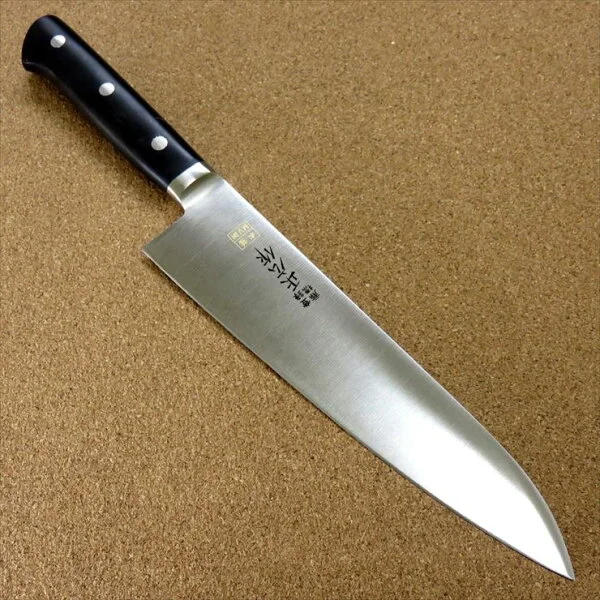
Masahiro MV Gyuto 210mm — $70
The Masahiro MV is the knife that Japanese culinary schools actually use to train the next generation of chefs. When thousands of students put this knife through 12-hour training days, six days a week, it survives. That tells you everything about its durability and reliability.
Molybdenum-vanadium stainless steel provides dependable corrosion resistance and consistent edge retention. The blade geometry is clean and the grind is even. The Western handle is simple but comfortable. At $70, you get a knife that has earned its place in professional education — and that pedigree translates directly to your home kitchen.
Verdict: The professional training standard. Built to endure daily abuse while maintaining solid cutting performance.
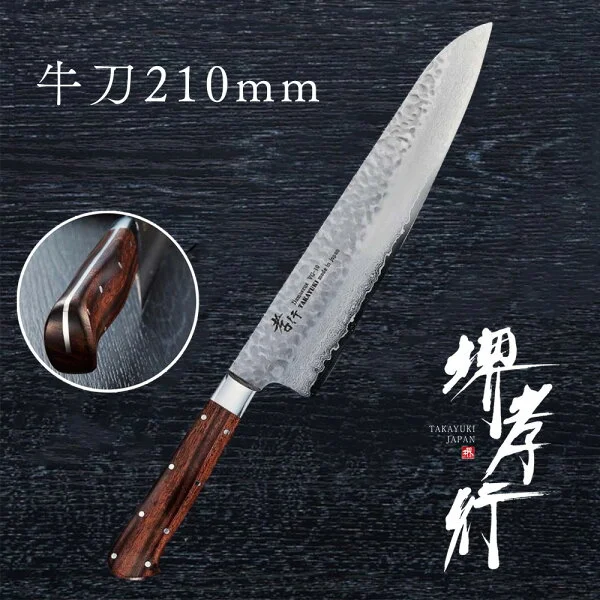
Sakai Takayuki Grand Chef VG-10 Gyuto 210mm — $95
Sakai is the knife capital of Japan, and the Grand Chef line brings genuine Sakai craftsmanship to an accessible price point. VG-10 steel receives a heat treatment from smiths who have been perfecting their craft for generations, resulting in edge retention that rivals knives costing twice as much.
At $95, you are at the top of the under-$100 range, and the difference in quality is noticeable. The grind is more refined, the blade is thinner behind the edge, and the overall feel is more premium than the budget options below it. If your budget stretches to $95, this is the best gyuto you can buy without crossing into triple digits.
Verdict: The best gyuto under $100. Genuine Sakai craftsmanship at an attainable price.
Best Santoku Under $100
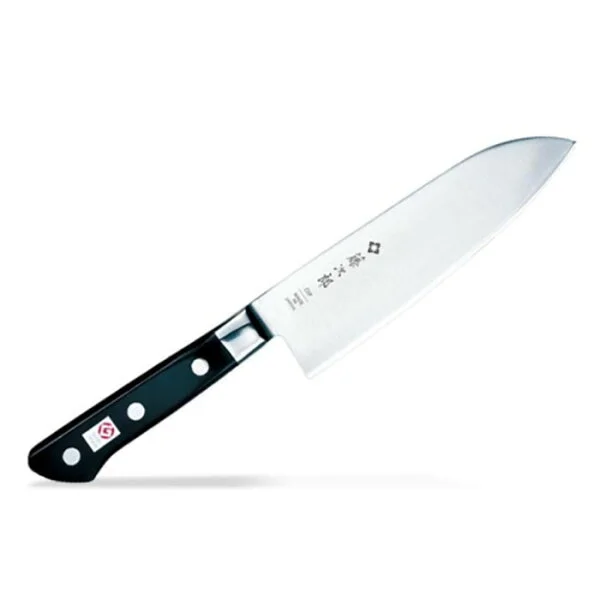
Tojiro DP Santoku 170mm — $50
The santoku version of the legendary Tojiro DP uses the same VG-10 three-layer construction in a 170mm blade that excels at the push-cut technique. If you prefer a shorter, wider blade for general kitchen work, or if your cutting board space is limited, the Tojiro DP Santoku is an outstanding choice.
At 150g, it is 20g lighter than the matching gyuto, making it feel quicker and more nimble. The flatter profile compared to the gyuto makes it particularly effective for chopping vegetables and performing the three “virtues” the santoku is named after: slicing, dicing, and mincing.
Verdict: Same excellent value as the DP gyuto, in a format that suits home cooks who prefer shorter blades.
Seki Magoroku 10000CL Santoku 165mm — $80
The 10000CL line from Seki Magoroku (Kai’s premium domestic brand) features a VG-10 core clad in Damascus-patterned stainless steel. Yes, you get Damascus cladding under $100. The 10000CL santoku is a beautiful knife that performs well above what its appearance-to-price ratio might suggest.
The composite handle uses laminated wood with a stainless bolster, giving it a premium feel. This is the knife to buy if aesthetics matter to you and you want something that looks as good on a magnetic strip as it performs on the board.
Verdict: The most visually impressive Japanese knife under $100, with solid cutting performance to back it up.
Best Nakiri Under $100
Tojiro DP Nakiri 165mm — $52
If you prep vegetables regularly, a dedicated nakiri will change your workflow. The Tojiro DP Nakiri uses the same VG-10 construction as the rest of the DP line in a flat-profiled, 165mm blade designed for straight push cuts. The entire edge contacts the board at once, producing clean, uniform slices through everything from cucumbers to cabbages.
At $52, it is an easy addition to a kitchen that already has a gyuto or santoku. Many cooks who add a nakiri to their rotation find themselves reaching for it far more often than expected.
Verdict: The best budget entry into nakiri knives. Pairs perfectly with a Tojiro DP gyuto.
Tojiro Shirogami Nakiri 165mm — $45
For the adventurous, this carbon steel nakiri offers something stainless cannot: the unmistakable feel of White Paper #2 steel. Shirogami takes an edge that is visibly sharper than VG-10, and the tactile feedback when cutting vegetables is genuinely different — smoother, more precise, more connected.
The trade-off is maintenance. This blade will rust if you leave it wet for even a few minutes. It will develop a patina from onions and tomatoes. But if you are curious about carbon steel and want to try it without spending much, this $45 nakiri is the safest entry point.
Verdict: The cheapest way to experience carbon steel. Remarkable cutting performance for adventurous cooks.
Best Petty Under $100
Tojiro DP Petty 150mm — $40
The petty knife is the most underrated tool in the kitchen, and at $40, there is no reason not to own one. The Tojiro DP Petty handles everything your gyuto is too big for: peeling ginger, deveining shrimp, segmenting citrus, slicing strawberries, trimming fat. At 150mm, it works equally well on the board and in your hand.
If you already own a Tojiro DP gyuto, adding the matching petty gives you a two-knife set that covers virtually every kitchen task for under $100 total.
Verdict: The most useful $40 you will ever spend on kitchen equipment.
Misono Molybdenum Petty 130mm — $65
Misono’s petty is a professional-grade knife at a home-cook price. The molybdenum stainless steel is tough and reliable, the 130mm blade is compact enough for precise in-hand work, and the fit and finish reflect Misono’s professional heritage. This is the petty that Japanese culinary students buy when they can afford to upgrade from their training knives.
Verdict: Professional pedigree in a compact, versatile package.
Best Complete Setup Under $100
If you are starting from zero and have exactly $100 to spend, here is the setup that maximizes your kitchen capability:
| Knife | Price |
|---|---|
| Tojiro DP Gyuto 210mm | $55 |
| Tojiro DP Petty 150mm | $40 |
| Total | $95 |
With the remaining $5, buy a cheap whetstone holder or a bar of barkeeper’s friend for maintenance. These two knives — a 210mm gyuto for main cutting tasks and a 150mm petty for detail work — will handle 95% of everything you do in the kitchen.
If your budget stretches slightly higher, add the Tojiro DP Nakiri 165mm ($52) for a three-knife set that covers literally every kitchen task. Total cost: $147 for a complete Japanese knife setup that will outperform any pre-packaged knife block set at twice the price.
Common Mistakes to Avoid
Do Not Buy a Knife Set
Pre-packaged Japanese knife sets under $100 are almost always a bad deal. The manufacturer spreads the budget across five or six knives, which means each individual knife suffers in steel quality, grind, and handle construction. You are better off buying one or two excellent knives than six mediocre ones.
Do Not Trust Amazon Mystery Brands
If you find a “Japanese knife” with a Japanese-sounding brand name, 67-layer Damascus cladding, and a $30 price tag on Amazon, it is not what it claims to be. Legitimate Japanese knife steel costs money. Real Japanese forging and grinding takes time. If the price seems too good to be true, the knife is almost certainly made with cheap steel and poor heat treatment.
Stick with established brands: Tojiro, MAC, Masahiro, Kai/Seki Magoroku, Global, Misono, Sakai Takayuki. These names have decades of reputation behind them.
Do Not Neglect Sharpening
A $55 Tojiro DP that is properly sharpened on a 1000-grit whetstone will dramatically outcut a $200 knife that has gone dull. Budget $20-30 for a basic whetstone (King 1000 or Shapton Kuromaku 1000) and learn to use it. The investment in sharpening equipment pays for itself many times over by keeping your knives performing at their best.
The Bottom Line
Under $100 is the sweet spot for Japanese knives. You get legitimate performance — thin blades, hard steel, keen edges — at prices that make the decision easy. The knives in this range will dramatically improve your cutting experience compared to typical Western kitchen knives, and they serve as an excellent foundation if you decide to explore higher-end options later.
Start with the Tojiro DP Gyuto ($55) if you want the single best value. Add a Tojiro DP Petty ($40) for the most capable two-knife setup under $100. Or stretch to the Sakai Takayuki Grand Chef ($95) if you want the best possible single knife in this price range.
Whatever you choose, you are about to discover why so many cooks say the same thing after buying their first Japanese knife: “I cannot believe I waited this long.”
🔪 この記事で紹介した包丁