Guide
The Only 3 Japanese Knives You Actually Need: Building Your Perfect Set
Published: 2026-04-09 · Updated: 2026-04-10
Every knife retailer wants you to believe you need a 10-piece set. A chef’s knife, a bread knife, a carving knife, a boning knife, kitchen shears, a honing rod, and a handsome block to display them all. It looks impressive on the counter. It also means eight of those tools gather dust while you reach for the same two knives every single time.
Here is the truth that professional cooks and serious home cooks already know: three well-chosen Japanese knives will handle 95% of everything you do in the kitchen. The remaining 5% is so rare that you can deal with it when it comes up. This guide shows you exactly which three knives to buy, why they work together so well, and specific models at three budget levels.
Why Only 3 Knives?
Think about what actually happens on your cutting board. You break down proteins and large vegetables. You do fine detail work like mincing garlic, peeling fruit, and trimming fat. You chop, slice, and dice vegetables in volume. That is fundamentally it.
A 10-piece knife set tries to give you a hyper-specialized tool for each sub-task. In practice, specialization only matters when you perform that task for hours every day. A sushi chef needs a yanagiba. A butcher needs a honesuki. You, cooking dinner at home, do not.
Three knives cover the full spectrum:
- One large, versatile blade for 70% of all cutting tasks.
- One small, agile blade for detail work and in-hand tasks.
- One flat-profiled blade optimized for vegetables.
There is no overlap, no redundancy, and no drawer full of knives you forgot you own.
The Essential Trio
1. Gyuto 210mm — Your Workhorse
The gyuto is the Japanese answer to the Western chef’s knife, and it is the single most important knife in your kitchen. At 210mm, it is long enough to handle watermelons and short enough to feel maneuverable. The curved belly allows a smooth rocking motion for mincing herbs, while the pointed tip handles precision work like scoring meat or breaking down a chicken.
What it handles:
- Breaking down whole chickens and portioning fish fillets
- Slicing, dicing, and mincing onions, carrots, and celery
- Mincing garlic and fresh herbs
- Carving roasts and slicing cooked meats
- Crushing ginger with the flat of the blade
- Scooping chopped ingredients off the board
If you could only own one knife for the rest of your life, the 210mm gyuto is the answer. It does everything reasonably well and most things exceptionally well.
2. Petty 150mm — Your Precision Tool
The petty knife is the Japanese utility knife, filling the gap between a chef’s knife and a paring knife. At 150mm, it is substantially more useful than the tiny 80mm paring knives that come in Western sets. You can use it on the board for small tasks or in your hand for peeling and trimming.
What it handles:
- Peeling and segmenting citrus fruits
- Trimming silver skin from tenderloins
- Slicing strawberries, mushrooms, and shallots
- Deveining shrimp
- Mincing a single clove of garlic when the gyuto feels like overkill
- Cutting cheese and small fruits in hand
The petty is the knife you reach for when your gyuto feels too large and clumsy for the job. It is also the knife guests borrow when they offer to help with prep, because its size is non-intimidating and immediately intuitive.
3. Nakiri 165mm — Your Vegetable Specialist
The nakiri is a double-bevel vegetable cleaver with a flat blade profile and a thin, straight edge. Where the gyuto curves, the nakiri stays flat, which means every millimeter of the edge contacts the cutting board simultaneously. This makes it devastatingly efficient at chopping, push-cutting, and tap-chopping through vegetables.
What it handles:
- High-volume vegetable prep: cabbage shredding, onion dicing, pepper julienne
- Precision cuts on dense vegetables like butternut squash and sweet potato
- Paper-thin slices of cucumber and radish
- Rough-chopping leafy greens like kale, chard, and bok choy
- Clean, flat cuts on herbs without bruising
The flat profile also means you get perfectly uniform cuts without the rocking motion that a curved blade requires. If you cook a lot of vegetables, and you should, the nakiri will become your favorite knife within a week.
Why This Combination Works
The magic of this trio is that each knife excels where the others have weaknesses.
The gyuto handles the vast majority of tasks but struggles with very small items (a single garlic clove rolls away from its wide blade) and is not optimized for flat-cutting through a mountain of vegetables.
The petty fills every gap below the gyuto’s comfortable range. Anything where you need a delicate touch, in-hand control, or a blade that fits into tight spaces.
The nakiri takes over whenever you face serious vegetable volume. Its flat edge and tall blade height give you speed and consistency that a gyuto simply cannot match on a pile of carrots or a head of cabbage.
Together, these three cover slicing, dicing, mincing, chopping, peeling, trimming, and carving. The only common kitchen tasks they do not handle are bread slicing and butchering through bone, which we address below.
Budget Builds: Specific Recommendations
Every recommendation below uses stainless or semi-stainless steel. Beginners should not start with reactive carbon steel. You want to focus on cooking, not babysitting your knives.
The $100 Build — Maximum Value
This set proves that excellent Japanese knives do not require a large investment. Each knife in this tier punches far above its price point.
| Role | Knife | Steel | Price |
|---|---|---|---|
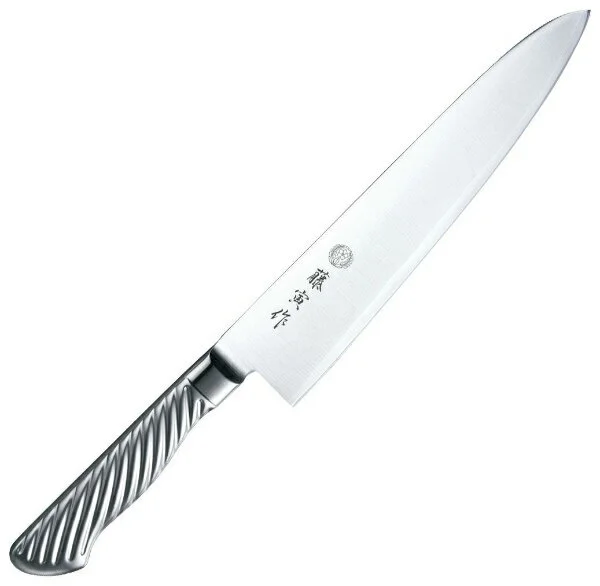
| Gyuto 210mm | Tojiro DP F-808 | VG-10 | ~$55 |
| Petty 150mm | Tojiro DP F-801 | VG-10 | ~$30 |
| Nakiri 165mm | Tojiro DP F-310 | VG-10 | ~$40 |
| Total | ~$125 |
The Tojiro DP line is the most recommended entry-level Japanese knife series for good reason. VG-10 steel at 60 HRC, competent grinds, and a comfortable western handle. The fit and finish will not win beauty contests, but the cutting performance is genuinely impressive for the price. This is the build for anyone who wants to test whether Japanese knives are right for them without financial risk.
The $300 Build — The Sweet Spot
This is where the experience transforms. Better steel, thinner geometry, refined handles, and noticeably superior edge retention.
| Role | Knife | Steel | Price |
|---|---|---|---|
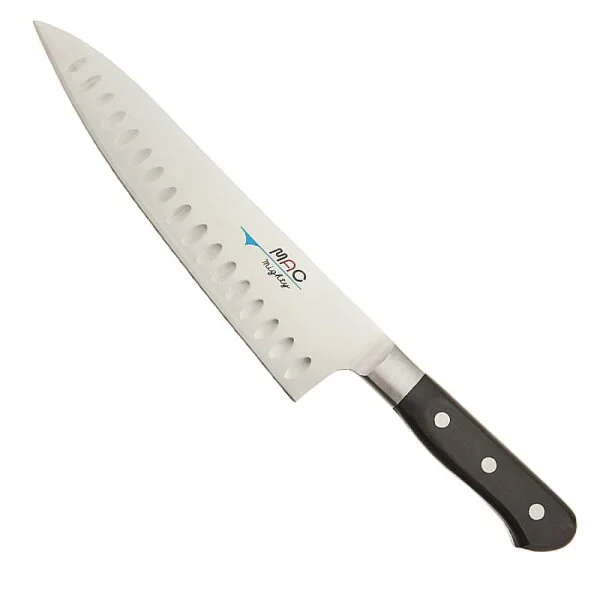
| Gyuto 210mm | MAC Professional MBK-85 | MAC Original | ~$145 |
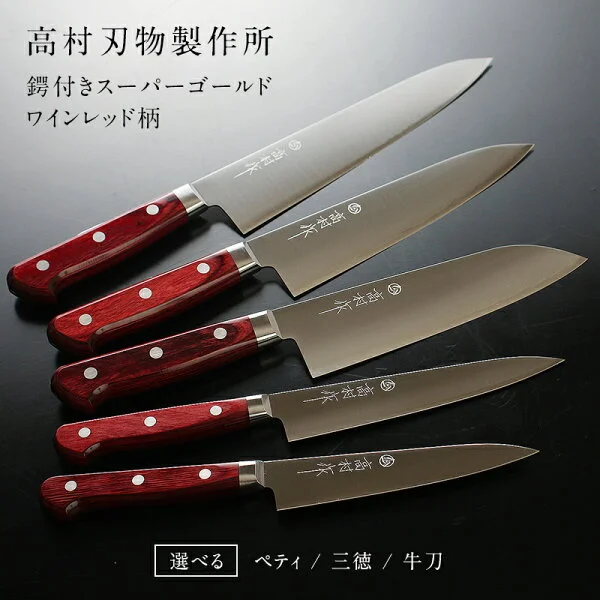
| Petty 150mm | Takamura Chromax Petty 150mm | Chromax | ~$75 |
| Nakiri 165mm | Tojiro Zen Black Nakiri 165mm | VG-10 | ~$80 |
| Total | ~$300 |
The MAC Professional gyuto is a legendary workhorse trusted by professional kitchens worldwide. Its unique dimpled blade reduces food sticking, and the proprietary MAC steel takes a razor edge with minimal effort. Paired with the laser-thin Takamura Chromax petty, which cuts with almost zero resistance, and the refined Tojiro Zen nakiri with its upgraded fit and finish, this set delivers a professional-grade experience for a very reasonable total.
The $500 Build — Endgame Quality
These are knives you will keep for decades. Premium steels, exceptional geometry, and craftsmanship that makes prep work feel like a privilege.
| Role | Knife | Steel | Price |
|---|---|---|---|
| Gyuto 210mm | Takamura R2 Gyuto 210mm | SG2 (R2) | ~$220 |
| Petty 150mm | Takamura R2 Petty 150mm | SG2 (R2) | ~$120 |
| Nakiri 165mm | Masakage Yuki Nakiri 165mm | Shirogami #2 (clad) | ~$130 |
| Total | ~$470 |
The Takamura R2 line represents one of the best value propositions in premium Japanese knives. SG2 powdered steel at 63 HRC in an impossibly thin blade produces a cutting sensation unlike anything else. These knives glide through food with barely a whisper of resistance. The Masakage Yuki nakiri pairs beautifully, with a carbon steel core clad in stainless for easy maintenance, a kurouchi (forge-scale) finish that reduces food stiction, and the kind of effortless vegetable cutting that makes you want to cook more.
What About a Bread Knife?
This is the most common question, and it is a fair one. If you bake bread regularly or buy artisan loaves with hard crusts, a serrated bread knife is genuinely useful. The three knives above will struggle with a crusty sourdough boule.
However, a bread knife does not need to be Japanese or expensive. A Victorinox Fibrox Bread Knife (~$25) does the job perfectly and will likely outlast you, since serrated edges rarely need sharpening. Buy one if you need it, but do not let it complicate your Japanese knife decision.
What About Bone and Frozen Food?
Do not use any of these knives on bone, frozen food, or coconut shells. Japanese knives use hard, thin steel that will chip under lateral stress or impact with dense materials. For breaking down bone-in cuts, use a Western-style heavy chef’s knife or a dedicated cleaver. For frozen food, let it thaw first. Seriously.
Care Tips for Your New Set
Maintaining three knives is straightforward. Build these habits and your knives will last a lifetime.
Daily care:
- Hand wash with warm soapy water immediately after use. Never put Japanese knives in the dishwasher. The detergent is abrasive, the jostling chips edges, and the heat can damage handles.
- Dry completely before storing. Even stainless steel can develop spots if left wet.
- Use a wooden or plastic cutting board. Glass, marble, and ceramic boards destroy edges instantly.
Weekly or as-needed:
- Strop on a leather strop or fine ceramic honing rod to maintain the edge between sharpenings. Do not use a traditional steel rod, as the steel is too hard and will chip rather than realign.
Every few months:
- Sharpen on whetstones. A basic two-stone set (1000 grit and 3000 grit) costs about $30 and is all you need. Japanese knives sharpen at 15 degrees per side. Five to ten minutes on the stones restores a factory-sharp edge.
- If you are not ready to learn freehand sharpening, a guided sharpening system like the Shapton or King combination stone with an angle guide is a good compromise.
Storage:
- A magnetic knife strip is the best option. It keeps edges safe, knives accessible, and looks great on the wall.
- If you prefer drawer storage, use blade guards or a knife roll. Never toss bare knives into a drawer.
The Minimalist Kitchen Philosophy
There is a deeper reason to own fewer, better knives. When you have three knives that you know intimately, you develop real skill with each one. You learn exactly how your gyuto responds to a rocking chop versus a push cut. You instinctively know the right angle to hold your petty when peeling ginger. Your nakiri becomes an extension of your hand during vegetable prep.
A drawer full of mediocre knives teaches you nothing. Three great knives teach you everything.
Final Recommendation
If you are starting from zero and want a clear answer:
Buy the $100 Tojiro DP set. Use it for six months. Learn proper technique and basic sharpening. Then, when you understand your own preferences, upgrade to the $300 or $500 tier with confidence, knowing exactly what you want.
The best knife set is not the most expensive one. It is the one you actually use, maintain, and enjoy every single day. Three knives. That is all you need.
🔪 この記事で紹介した包丁